Start today! Book your initial consultation.
Physiotherapy
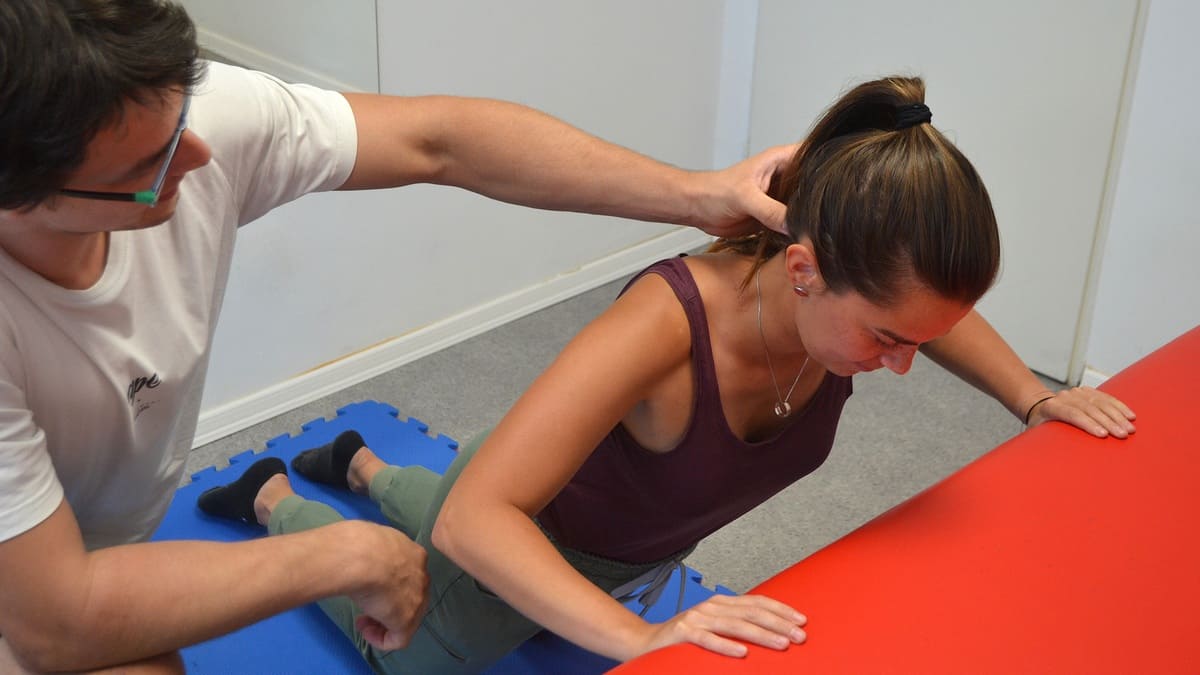
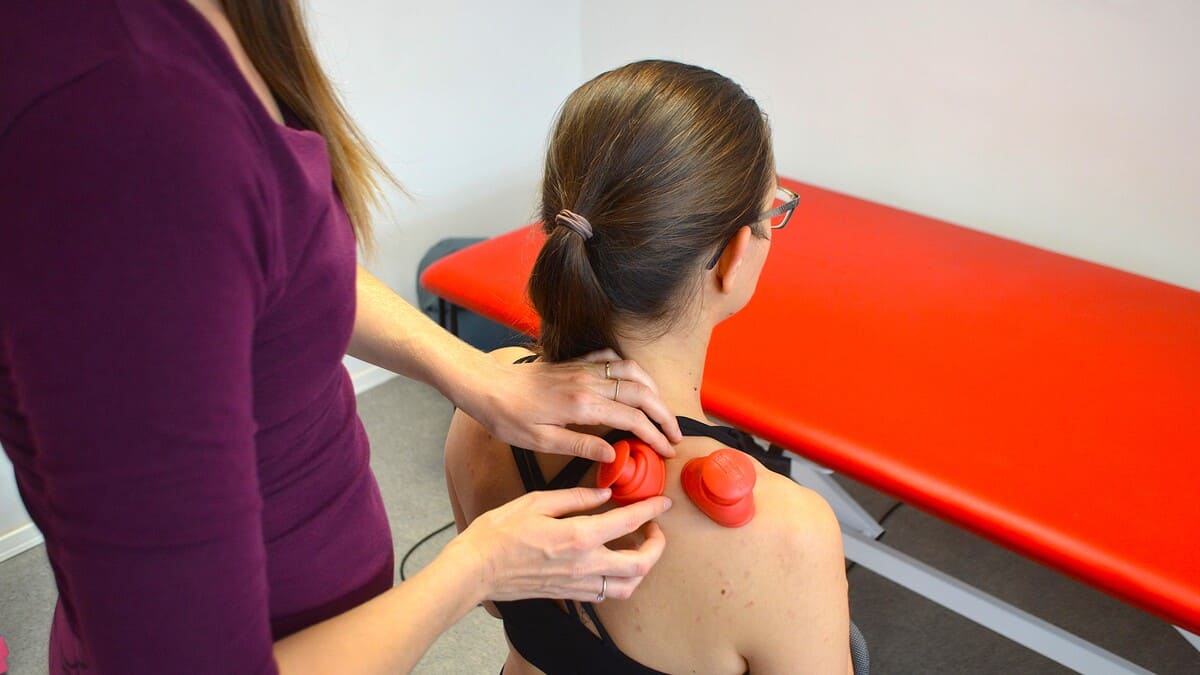
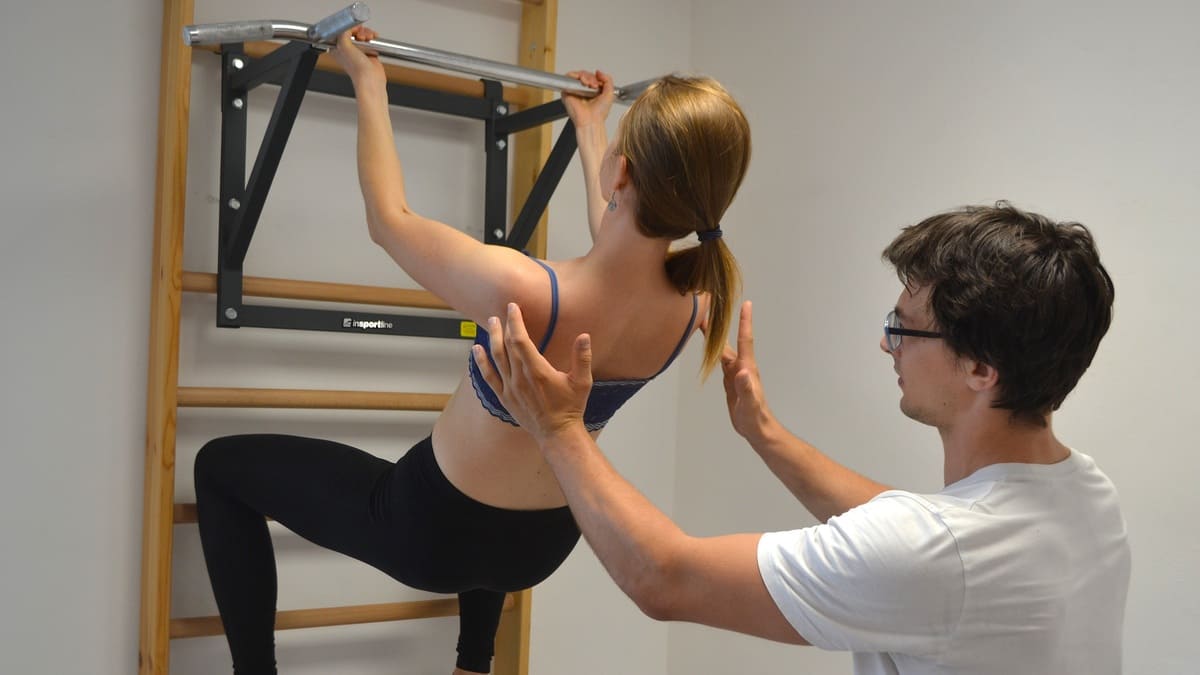
Physiotherapy is always conducted according to an individual plan established during the initial consultation, and our physiotherapists and doctors continuously consult about your progress.
Most of our physiotherapists have a broad scope: our team also includes colleagues specialising, among other areas, in children.
Start with movement, finish with relief
Physiotherapy as a discipline has developed significantly over the past decades and now offers a vast array of possibilities.
A physiotherapist can help you address a wide variety of painful conditions of the musculoskeletal system (both acute and chronic), set up proper ergonomics at work and in your overall lifestyle.
You can also consult a physiotherapist for future‑oriented prevention or to work on your movement coordination and variability. In short — if you want to move without pain or simply “move better”.
If you are about to start a sport, a physiotherapist can advise you on its technique and on how to dose your load so that you don’t injure yourself.
Gynaecological Physiotherapy
Physiotherapy can effectively assist in a variety of gynaecological issues.
For example:
- painful menstruation or intercourse,
- symptoms of endometriosis,
- vaginismus,
- infertility,
- post‑gynaecological operations,
- dealing with incontinence, prolapses etc.
- preparing for pregnancy.
Physiotherapy is also suitable for women preparing for pregnancy. We can adjust the tension of the soft tissues in the pelvis to create better conditions for conception, and may support the IVF process.
Gynaecological physiotherapy uses a combination of approaches, such as the DNS method, the Mojžíšová method, visceral or neural therapy. Equally important is work with the pelvic floor and the woman’s psyche.
Physiotherapy During Pregnancy and After Birth
The stereotype that “you just have to endure pregnancy” is hopefully behind us. On the contrary, physiotherapy can deliver enormous benefit to a pregnant woman.
It can address:
- painful conditions during pregnancy,
- a possible diastasis,
- help prepare the woman for childbirth,
- and support the post‑partum period.
A combination of visceral and neural therapy can also alleviate pregnancy‑related nausea.
After childbirth, physiotherapy has its place especially:
- in relation to restoring pelvic floor function,
- reintegrating the abdominal wall,
- adjusting diastasis,
- and helping the mother reconnect with her body as soon as possible.
Especially important is the work with any scars, whether after delivery trauma or a caesarean section — along with psychological support for the mother.
Physiotherapy for Women After Breast Cancer Surgery
It is long since the belief held that “we must not touch an oncological patient” has held sway. Quite the opposite: physiotherapy can make a significant contribution to improving a patient’s quality of life, sometimes even during oncological treatment. However, everything must take place with the consent of the treating oncologist, with whom we strive to maintain close contact.
For women after breast cancer surgery, physiotherapy plays an important role:
- in lymphedema prevention,
- scar treatment,
- and restoring range of motion in the shoulder joints and thorax.
Visceral Therapy
By visceral therapy we mean a gentle yet deep treatment of the soft tissues located among the internal organs.
It is based on anatomical and physiological principles. Simply put:
- Organs are not loosely situated in the body but connected via fascia to the spine and other structures.
- All structures in the body (muscles, bones, organs, nerves) are wrapped in fascia.
- All structures must be freely mobile relative to each other.
If this does not happen, increased tension develops in the body which can lead to pain (whether in the musculoskeletal system, the abdomen, etc.). It may also significantly affect the function of organs themselves.
This therapy is of particular importance, for example:
- in functional digestive system issues (reflux, chronic constipation or diarrhoea),
- in post‑abdominal surgery conditions
- or in gynaecological problems.
Neural Therapy
This is a method founded on the same principles as visceral therapy: it involves treatment of neural pathways, whether in the periphery or directly treating nerve roots emerging from the spinal cord.
This approach is a valuable complement, for example, in the therapy of disc herniations or entrapment syndromes (such as carpal tunnel syndrome).
It also includes techniques for treating structures inside the skull; we use it, for example:
- in the therapy of migraines,
- tinnitus,
- or to support the regulation of the autonomic nervous system and relaxation.
Neurological Physiotherapy
Neurological issues are extremely diverse. Physiotherapy can be beneficial for a range of neurological diagnoses such as:
- disc herniations,
- various compression syndromes,
- multiple sclerosis,
- consequences of cerebral palsy in adults,
- migraines,
- dizzy conditions.
Collaboration with the treating neurologist is crucial here. It also has significance in gynecology or psychosomatic issues. Neurological therapy uses a combination of approaches; neural therapy is a particularly valuable method.
Foot and Gait Physiotherapy
Are you troubled by:
- flat feet,
- bunions,
- valgus ankles
- or foot pain?
Physiotherapy can help with these issues too.
We focus on restoring the physiological function of the foot, proper gait and running patterns.
The most important part of the therapy is active work, and we also use manual treatment, taping or individually prepared Formthotics orthotic soles. We will also advise you on footwear selection (including barefoot shoes) and check your child’s little feet too.
Temporomandibular Joint (TMJ) Physiotherapy
Physiotherapy can also assist with a number of disorders of the jaw joint, such as:
- bruxism,
- jaw instability
- or pain of the temporomandibular joint itself.
The jaw joint also has multiple influences on surrounding segments and its dysfunction can contribute, for example, to headaches or dizziness.
Jaw physiotherapy is also suitable during orthodontic treatment or afterwards, or following major dental procedures.
Physiotherapy for Tinnitus
Tinnitus is a challenging diagnosis which, although “not visible”, can significantly affect a person’s everyday life. It is often caused by a combination of influences and it is difficult to unpick everything.
Nevertheless, there exist a number of techniques from physiotherapy and beyond that can work with tinnitus — and few people know about them.
People with tinnitus often hear that “you just have to live with it” – but in many cases the symptoms of tinnitus can at least be partially influenced. At our centre, tinnitus is dealt with in the most detail by Dr. Píšková, who has personal experience with tinnitus and thus a clear understanding of the possibilities for its management.
Sports Physiotherapy
Physiotherapy for athletes is a very specialised field. Prevention is extremely important here, as is work on technique and compensatory training outside the sport itself. A physiotherapist can advise and set an appropriate support regime for athletes.
The result is not only resolving existing issues but also preventing injuries and improving performance in the given sport. Every sport has its own specifics, and therefore the work with each athlete will look entirely different.
First and foremost for athletes is work on coordination — the awareness and control of one’s own body. Next is stabilisation training and strength development. Work with the psyche is also important, though this then predominantly falls into the psychologist’s expert domain.
Physiotherapy for Dancers
Dancers are a very specific group of athletes because dance combines athletic performance with an aesthetic component.
It is advantageous if a dancer seeks a physiotherapist with personal dance experience, who knows all the specifics and is familiar with training methods. At FLOW we have our own experience across a wide variety of dance styles and we look after dancers with pleasure.
Dance, like any other performance or elite sport, goes in many respects beyond physiology. Therefore, compensation of training load for injury and pain prevention is extremely important for dancers.
Also very important is work on the quality of dance technique and partnering. Addressing already‑existing injuries and painful conditions also has its specifics. An integral component here is work with the psyche, which then particularly falls within the psychologist’s expertise.
Scar Treatment
Knowledge about scars has advanced rapidly over the past decade. Today we know that it makes sense to treat scars even many years after surgery and that so‑called “active scars” can significantly affect the musculoskeletal system — for example by causing pain or restricted range of motion.
They may also affect the function of internal organs (they may be, for instance, a cause of conception difficulties, painful intercourse, or digestive issues). And this applies even to scars that appear “small” or “well‑healed” on the surface. A scar passes through several tissue layers and should be addressed throughout its entire extent.
Physiotherapy for Children
At FLOW, prevention is crucial for us. Therefore we perform preventive posture and feet checks in older children.
We will advise you on how best to support the healthy development of your child, recommend suitable physical activity or footwear.
If therapeutic intervention is needed, we will select the most suitable paediatric therapist from our team for you.
In children we most often address:
- valgus ankles
- and postural defects.
We also support active/sporting children and their compensatory training.